Mobile specimen collection for physician networks sends a trained technician to a patient’s home or another convenient location. The technician collects the specimen on behalf of a group practice, network, or health system, then delivers it to the lab the provider designates. This guide is for Medical Directors, Chief Operating Officers, and Directors of Network Operations managing specimen collection across multiple locations. It covers why coverage tends to fragment as a network grows and the operational burden that creates. It also covers what consolidating to one partner needs to solve.
What is mobile specimen collection for physician networks?
Mobile specimen collection for physician networks is a service that sends a technician to collect a specimen outside a clinical site, on behalf of a group practice or network, then delivers it to the designated lab. It is used when a patient cannot easily reach a site, and it can also fill a capability gap when clinical staff at a location aren’t trained or licensed to perform the required draw.
Why coverage fragments as a network grows
Physician networks have told us the hard part is coordination, not the collection itself. Say a network starts with one or two local phlebotomy vendors as its first locations open. Then it adds sites, specialties, or markets, and the vendor list grows with it. Each vendor schedules differently, sets its own standards, and has its own contact person. Operations ends up juggling the handoffs, and the job gets harder with every new location.
Another issue arises when a location adds a service line, like INR monitoring or routine labs, and on-site clinical staff aren’t trained or licensed to perform the draw. That’s a capability gap, not a vendor-coordination issue, and it can end up getting solved one location at a time.
What consolidation needs to solve
- Coverage that fits your locations. Ask for a direct answer about the sites you have today and the ones you plan to add, not a general promise of reach.
- Clear ownership of the collection workforce. Know whether technicians are directly employed or supplied through local subcontractors, and who is accountable for each collection.
- Consistent collection protocols. Collections should follow the same process whether they happen at your flagship location or your newest site.
- Confirmation that a collection happened. Your operations team should hear when a collection is completed, not just that a visit was scheduled.
- Billing and reimbursement fit. Not every collection model works with every payer mix. Check the fit before onboarding, not after.
What one accountable partner looks like
DASHealth Dx provides national mobile specimen collection through a centrally coordinated service model. Technicians are directly employed, not independent contractors; operations are centralized, and collection protocols are standardized across the markets we serve. In practice, that means one accountable partner and a more consistent collection process across the locations we support, instead of a different local vendor relationship at each site. Your team gets a portal notification when each collection is completed. Coverage for your specific locations is confirmed before onboarding.
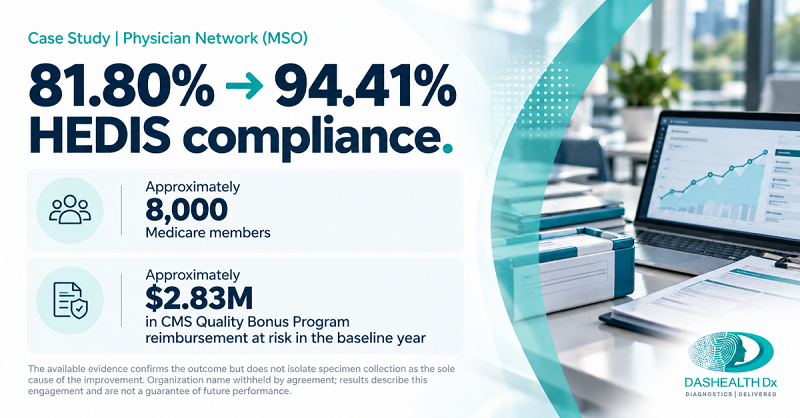
In one specimen-collection engagement with an MSO managing approximately 8,000 Medicare members, HEDIS compliance increased from 81.80% to 94.41%. In the baseline year, approximately $2.83 million in CMS Quality Bonus Program reimbursement was at risk. The available evidence confirms the outcome but does not isolate specimen collection as the sole cause of the improvement. Organization name withheld by agreement; results describe this engagement and are not a guarantee of future performance.
No. It covers specimen collection specifically, including cases where on-site staff is not trained or licensed to draw blood. DASHealth Dx collects and delivers specimens. It does not handle, produce, or report lab results.
Ask this directly during onboarding. Billing and reimbursement models vary by network and payer mix, and confirming fit early can help identify potential issues before onboarding.
Yes. Specimens are delivered to whichever lab your network designates.
If you're managing specimen collection across multiple locations through a patchwork of local vendors, send us a message.